

I’ve labelled this post ‘Principles’ because what you will read isn’t too dissimilar to what I’ve written before on my Substack.
However, I believe it’s imperative to reiterate specific ideas if they remain noticeable because it provides us with clarity.
Clarity in the sense of observing prevalent patterns, which implies that a team is being coached. And in the context of Arsenal, the level of coaching is of an incredible standard.
So, as we all know, we continued our incredible form with a comfortable win against Burnley at Turf Moor this weekend, and it’s the second Premier League fixture in succession where we’ve faced a back five; this time it was a nominal 5-2-3 utilised by Scott Parker’s men, when Arsenal were positioned away from goal kicks. There were similarities to Crystal Palace’s block last week, but Burnley’s pressure was evidently less aggressive.
I said in my piece last week that the intentions we showed weren’t exclusive to just Crystal Palace, and that’s what has motivated me to publish this piece. Let’s have a look at two specific sequences below, which will allow you to visualise what I’m attempting to say.
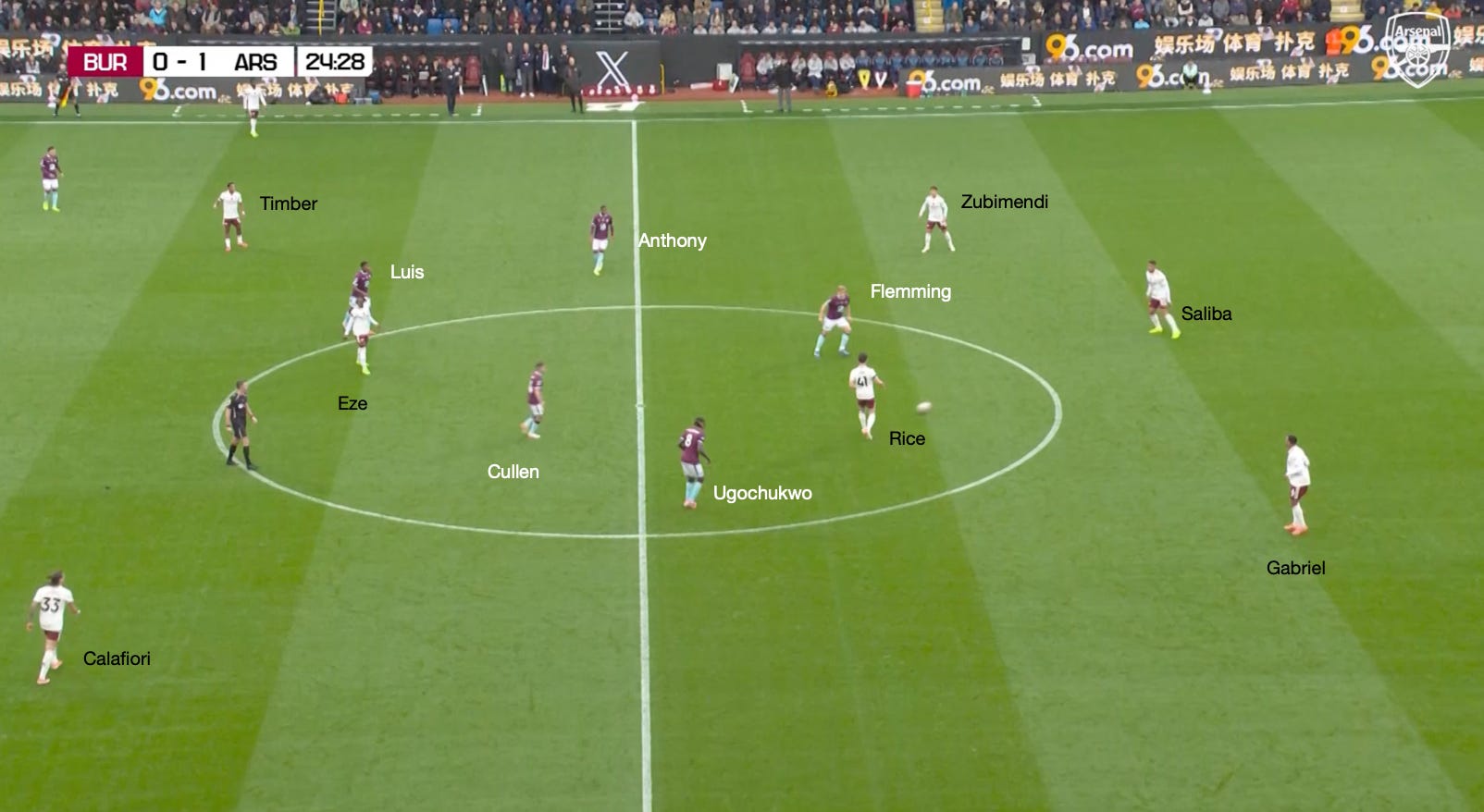
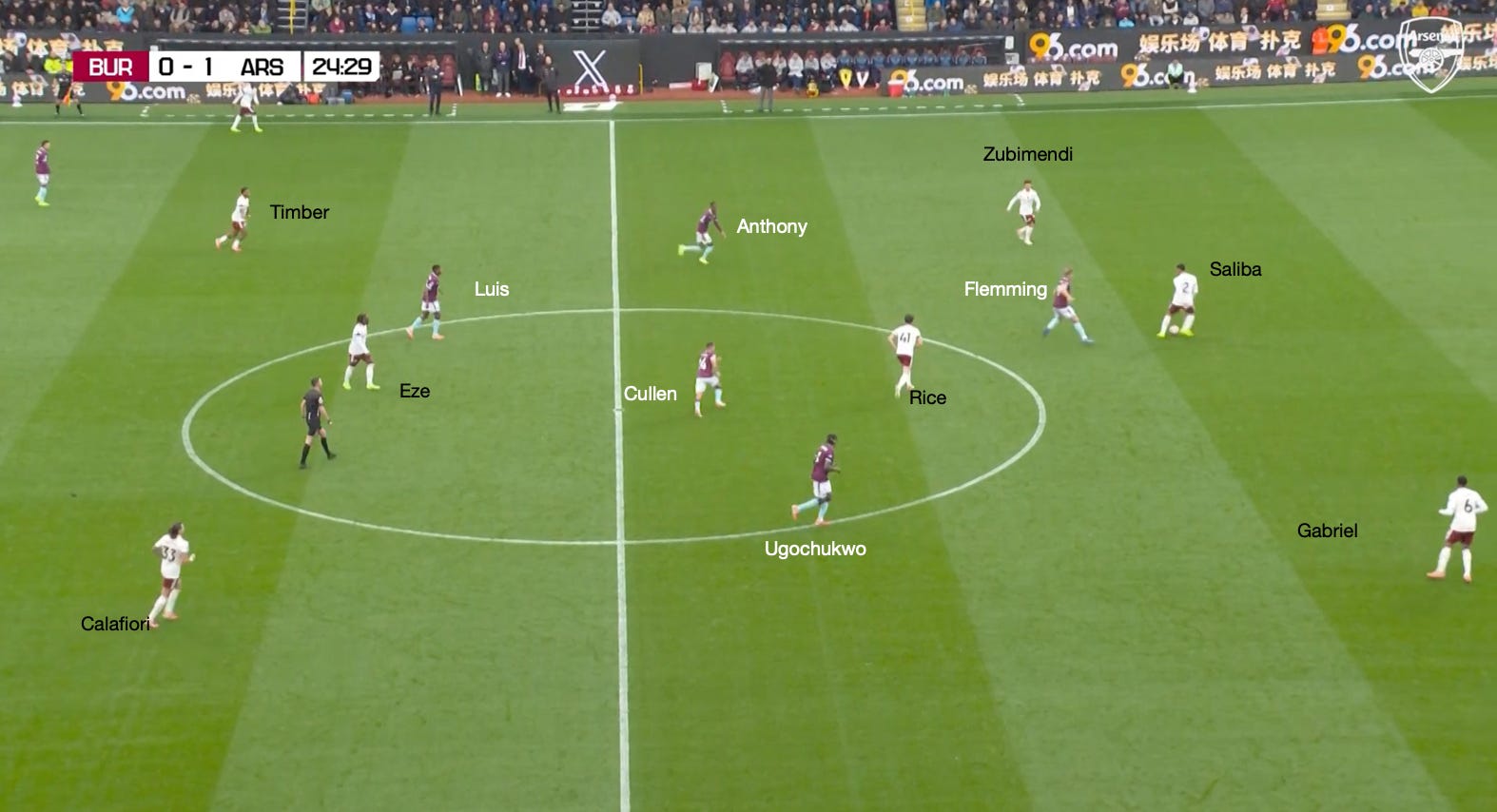
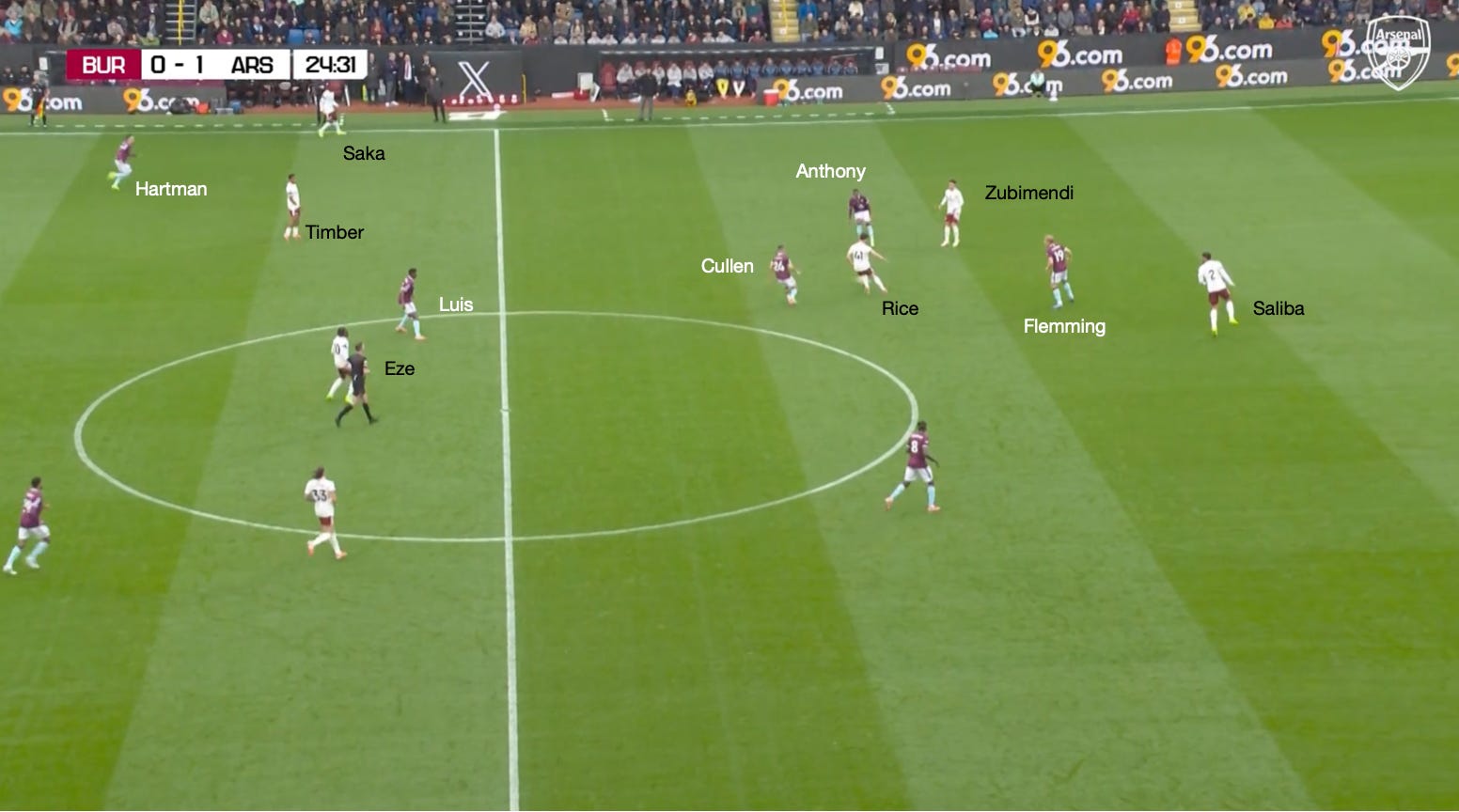
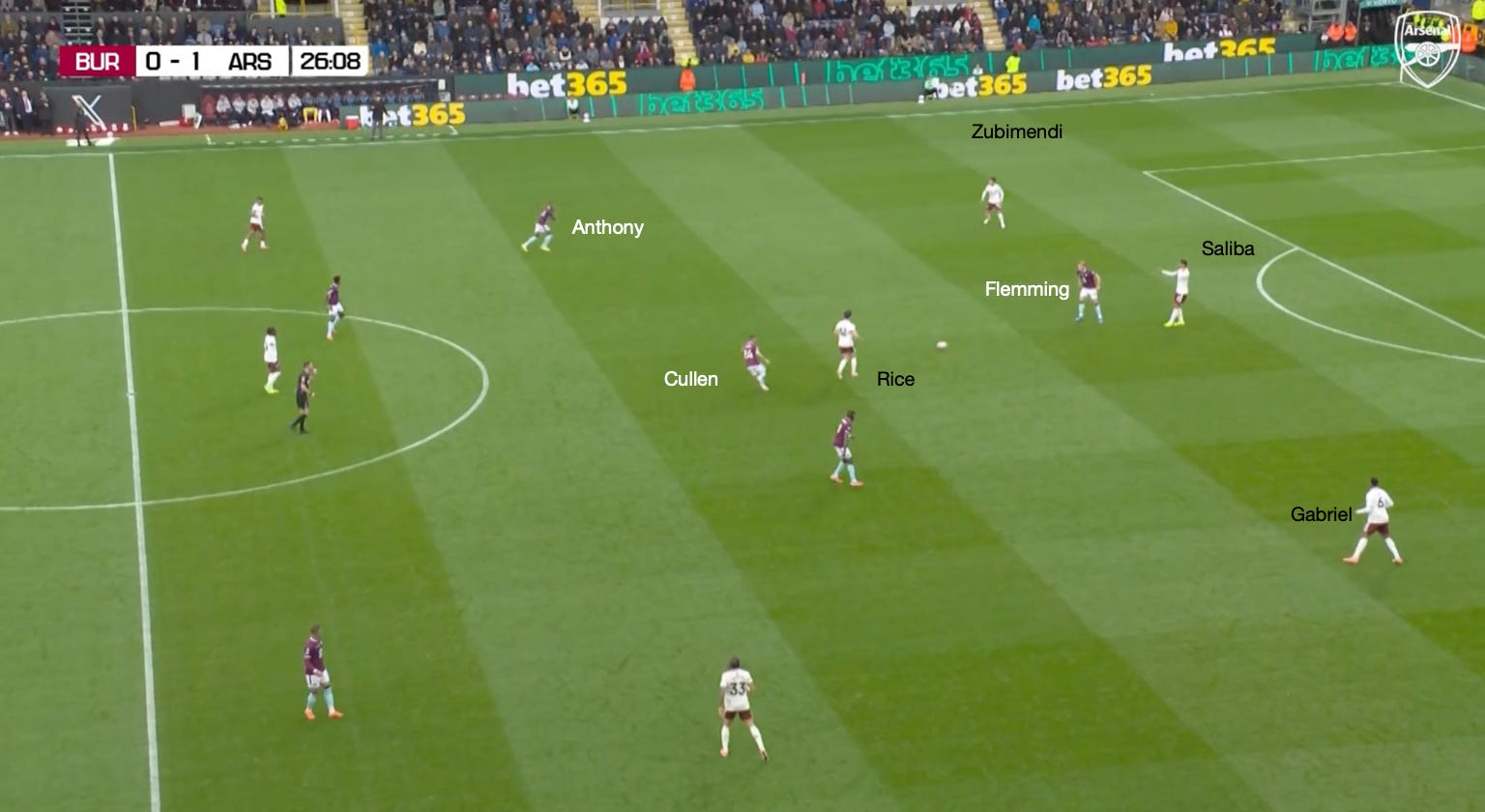
As you can see, against the Burnley CF, Zian Flemming, our back three consisting of Martin Zubimendi, William Saliba and Gabriel Magalhães, provides excellent coverage to circulate possession around Flemming, whilst also provoking pressure from the two outside forwards (Jaidon Anthony and Lesley Ugochukwu). Zubimendi dropping into wide right centre back allows Jurrien Timber to step forward, which in turn gives Eberechi Eze the freedom to shift laterally, which I’ve spoken about in my ‘Variation’ piece.
Now, if you read my ‘Crystal clear intentions’ post last week, Zubimendi occupied the nominal six position. On Saturday, however, it was Declan Rice in the single pivot, with one of the aims being to provoke a jump from one of Burnley's midfield pivot players (Florentino Luis and Josh Cullen), to maximise the overload present in midfield.
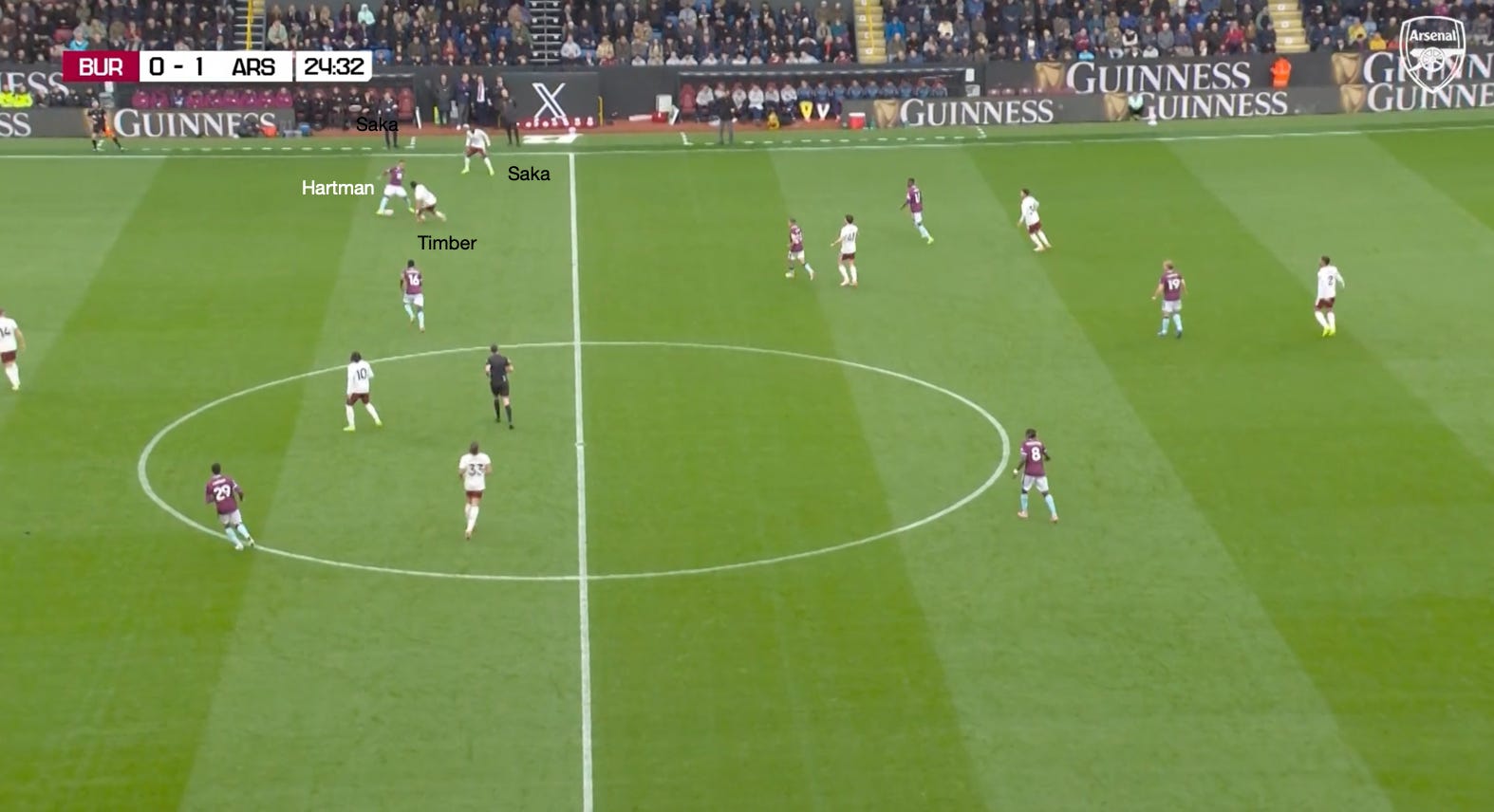
You can see this in action once Flemming presses Saliba, who then plays a square pass to Zubimendi, which is a common trigger for the opposition winger (Anthony) to jump. Rice shows for the ball by moving closer to Zubimendi, which entices Cullen to step out, leaving his partner, Luis, overloaded by Eze and Timber.
Timber is afforded the space because Viktor Gyökeres (not shown in the pictures above) is pinning the nearside wide central defender, Maxime Estève.
Seems very similar to Crystal Palace, right in terms of pinning the wide central defender to open space between the lines?
What lets us down here is the execution from Rice. A better pass and we are away, with both Timber and Bukayo Saka overloading the wingback, Quilindschy Hartman.
Take a look below at another example.
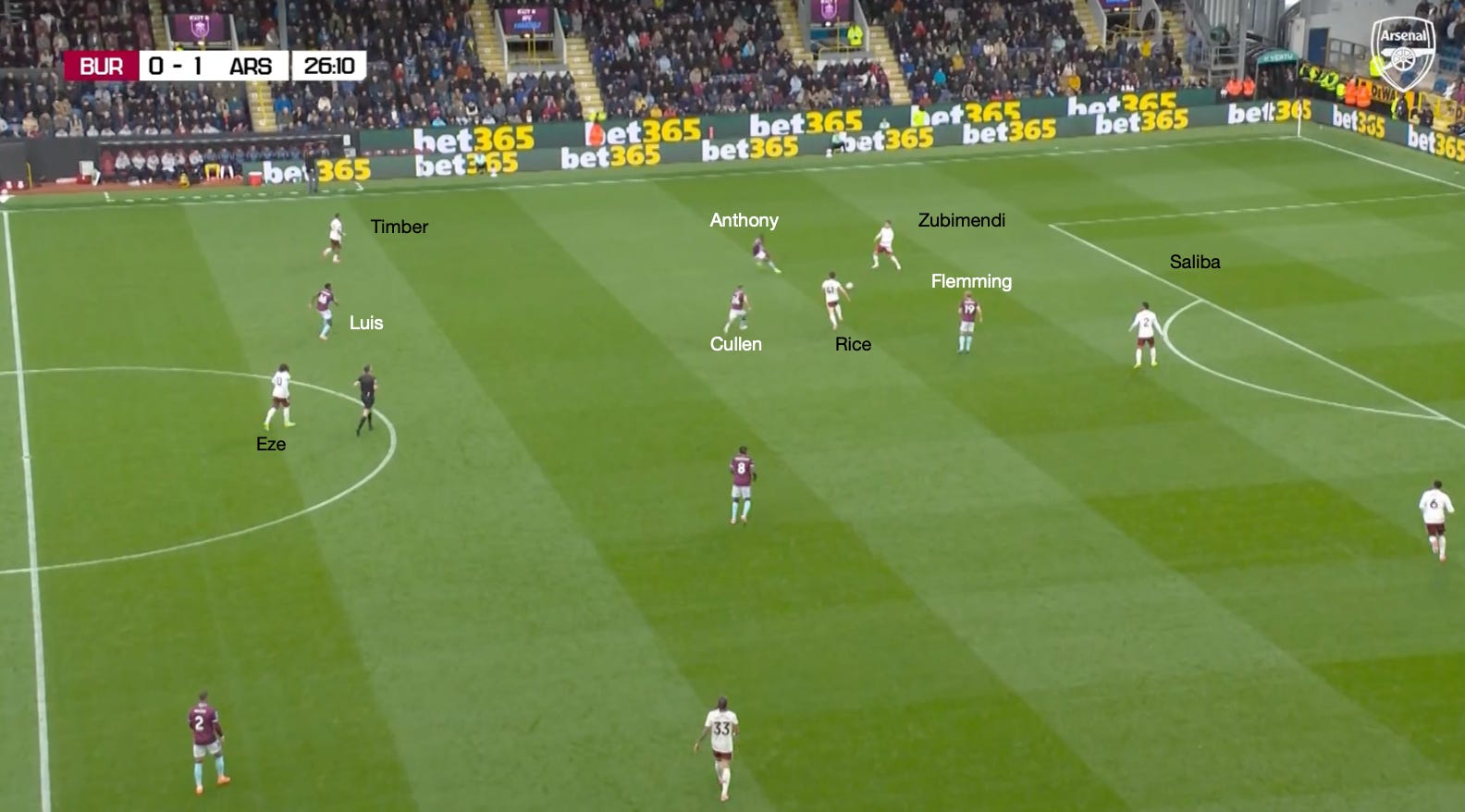
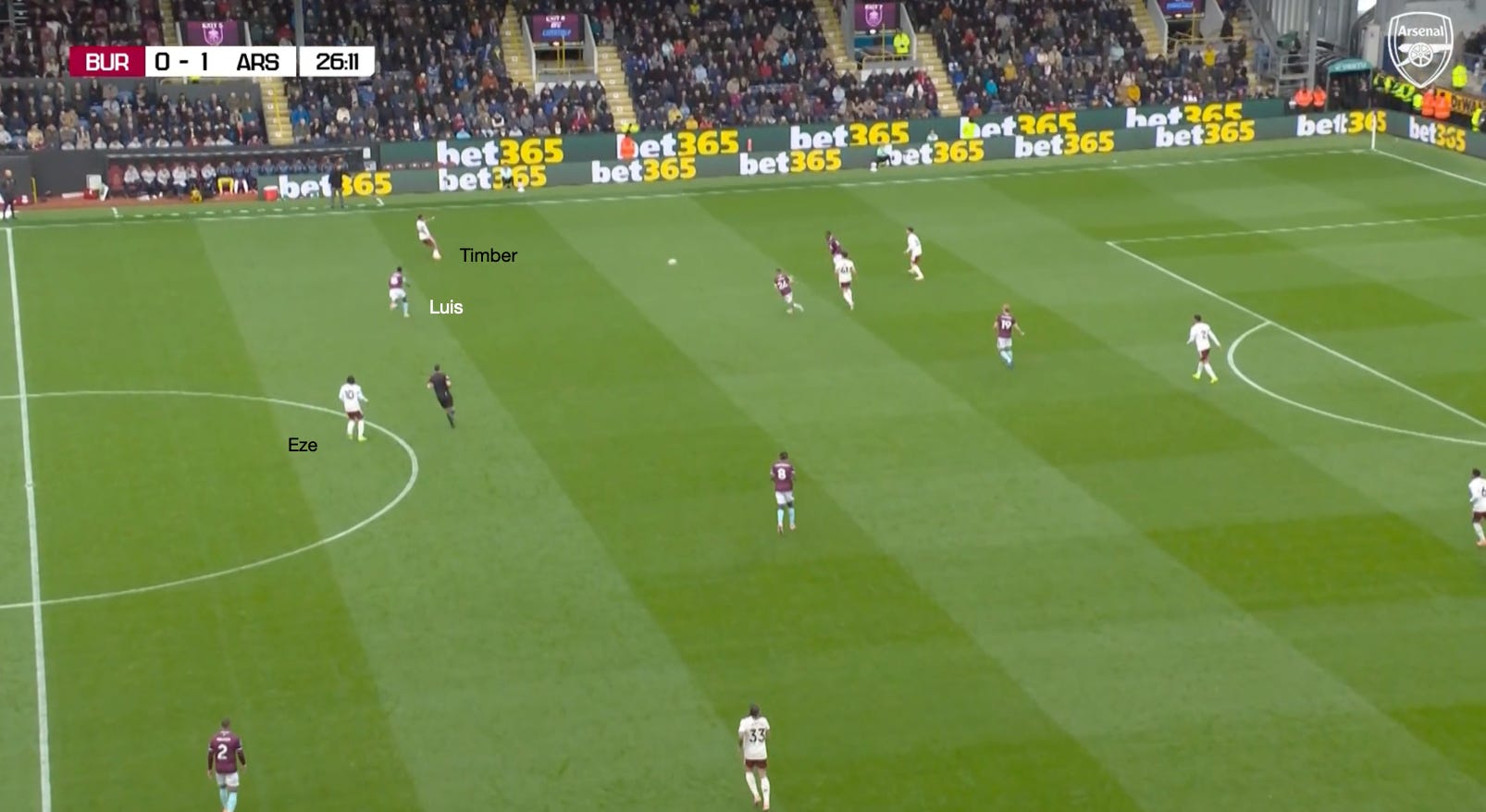
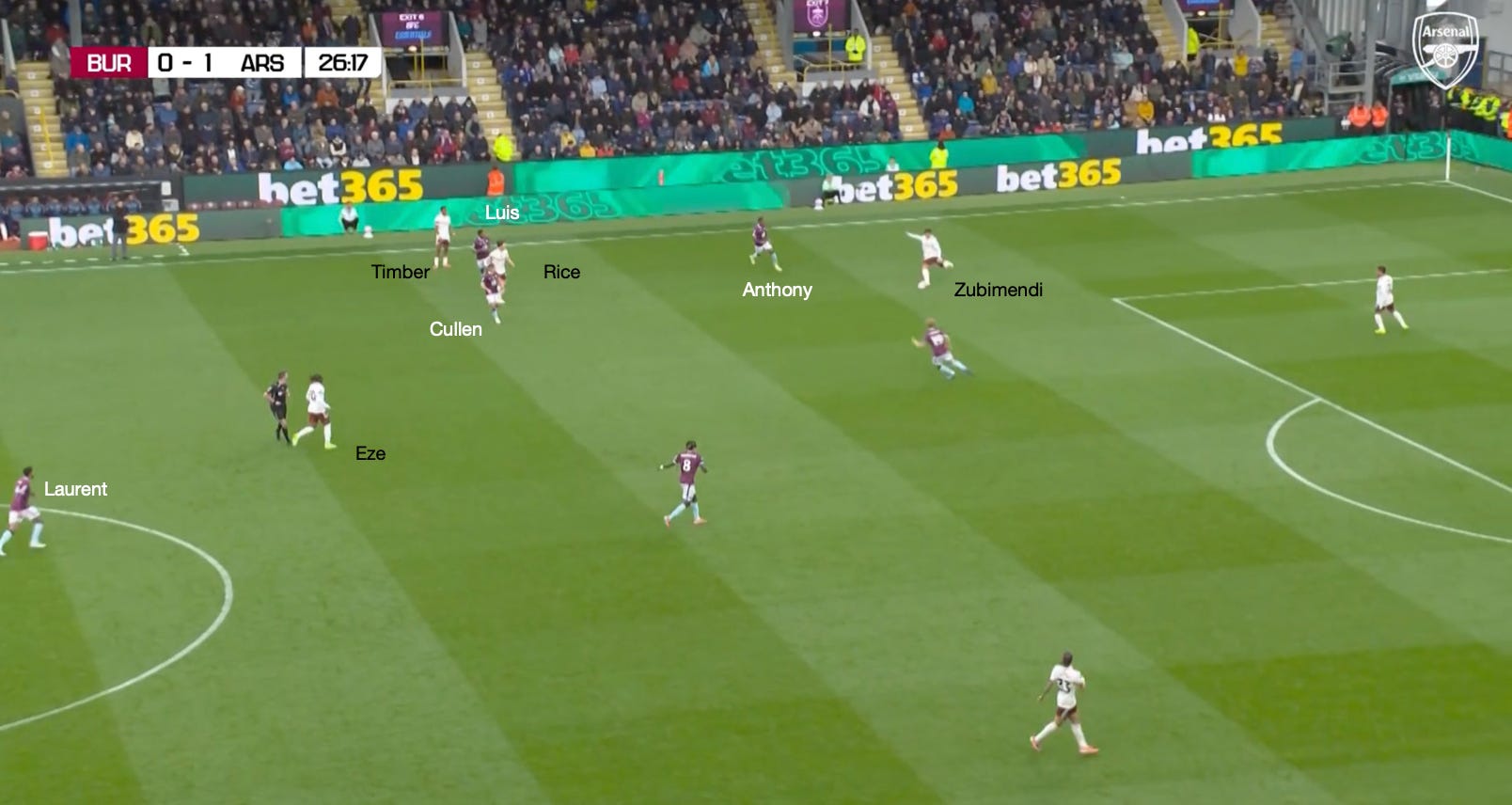
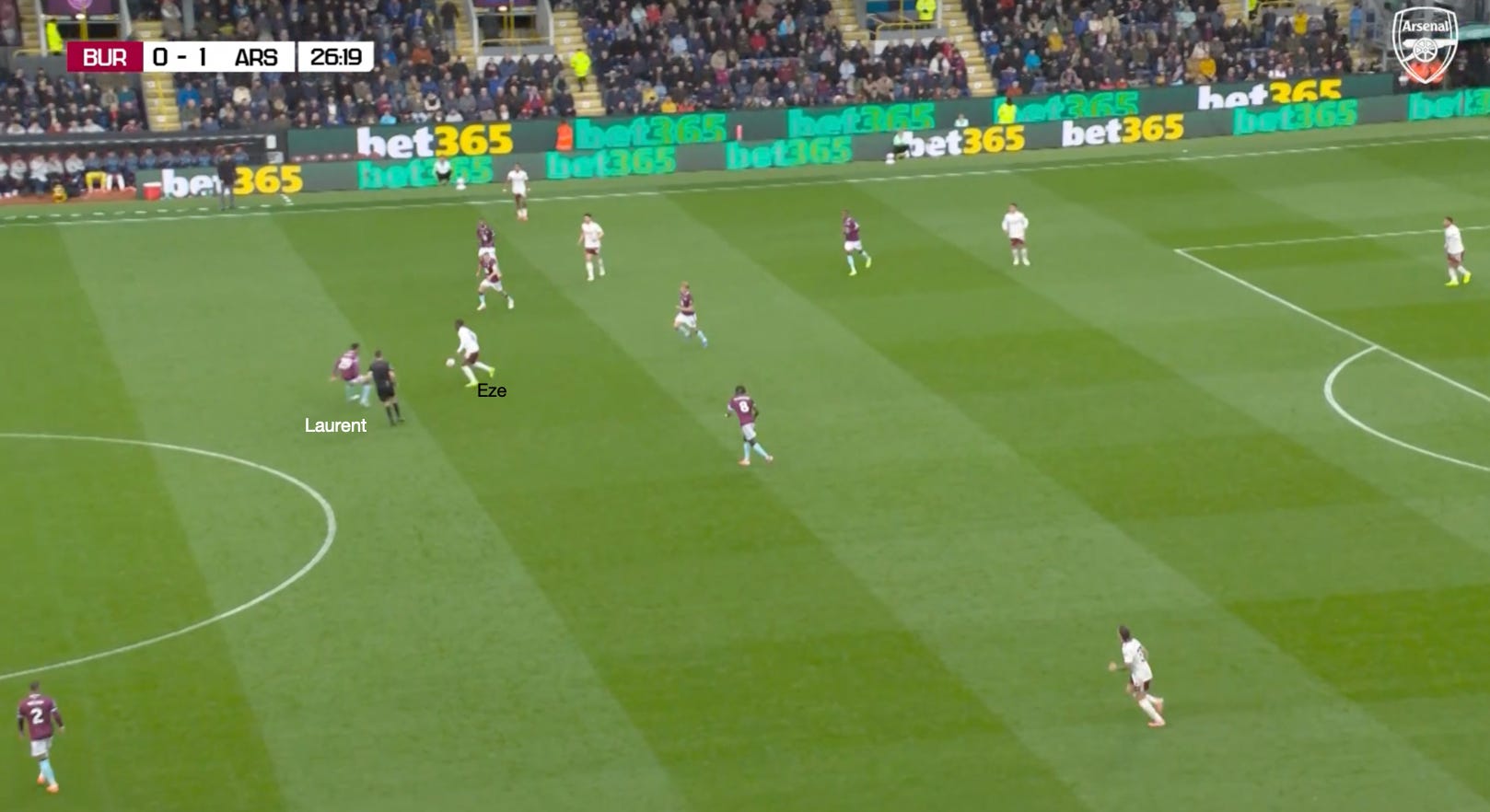
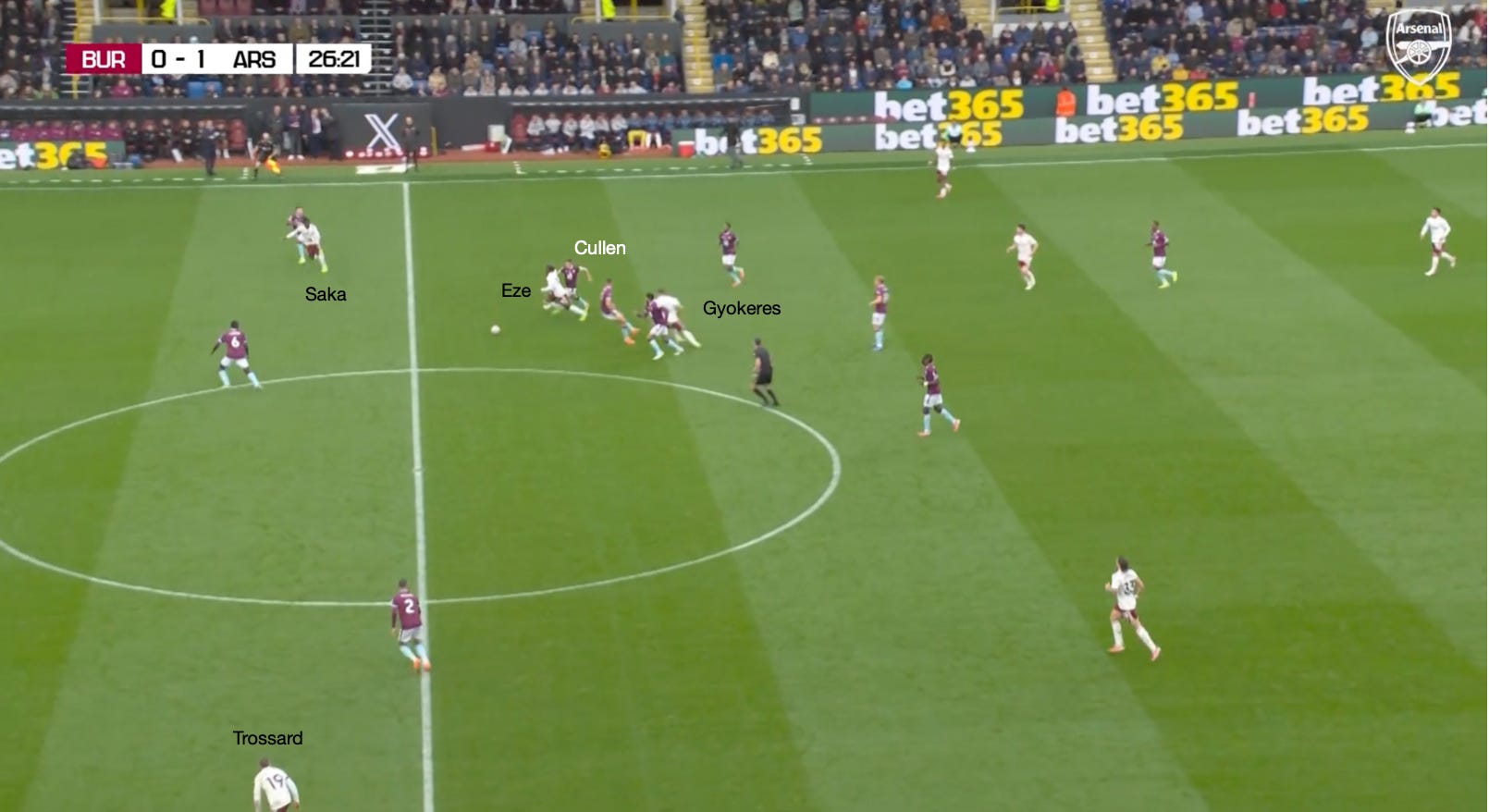
Flemming, once again pressing Saliba to deny the pass into Zubimendi, but Rice drops deeper to show for the ball, thereby allowing a simple bounce pass to occur from Saliba to Rice to Zubimendi, with the latter attracting pressure from Antony.
Rice continues to move closer to Zubimendi to offer a simple escape route, and notice Cullen following Rice’s movements again, which leaves Luis numerically overloaded by Timber and Eze, since both Saka and Gyökeres are pinning the wingback (Hartman) and wide central defender (Estève). The pass again from Rice isn’t great, but Timber does well to shield it before returning the ball to Zubimendi; in doing so, he’s dragged Luis away from the centre and with Rice offering support, this pulls Cullen wide too. The ripple effect this creates is that it leaves Eze initially unmarked in the middle of the park, and then it’s all about individual quality.
We’ve manufactured a favourable situation that allows Eze to receive in central spaces, which forces one of the centre-backs to jump out. Eze can be seen weaving past his man superbly, and with the help of Gyökeres acting as a wall, Eze is then free to carry in open space, with Saka and Leandro Trossard on the far side ready to latch onto a pass in behind. A foul from the recovering Cullen denies any chance arising, but what’s key is to acknowledge the principles, which provided the platform to dismantle Burnley’s out-of-possession (OOP) shape.
As I’ve said many times, how you manage the opposition’s wide central defenders in a back five system is key, and similarly to ‘pinning’, we also saw ourselves add depth to our attacks with balls in behind once we provoked the wide central defenders to step away from their line.
Take a look below at two examples of this.
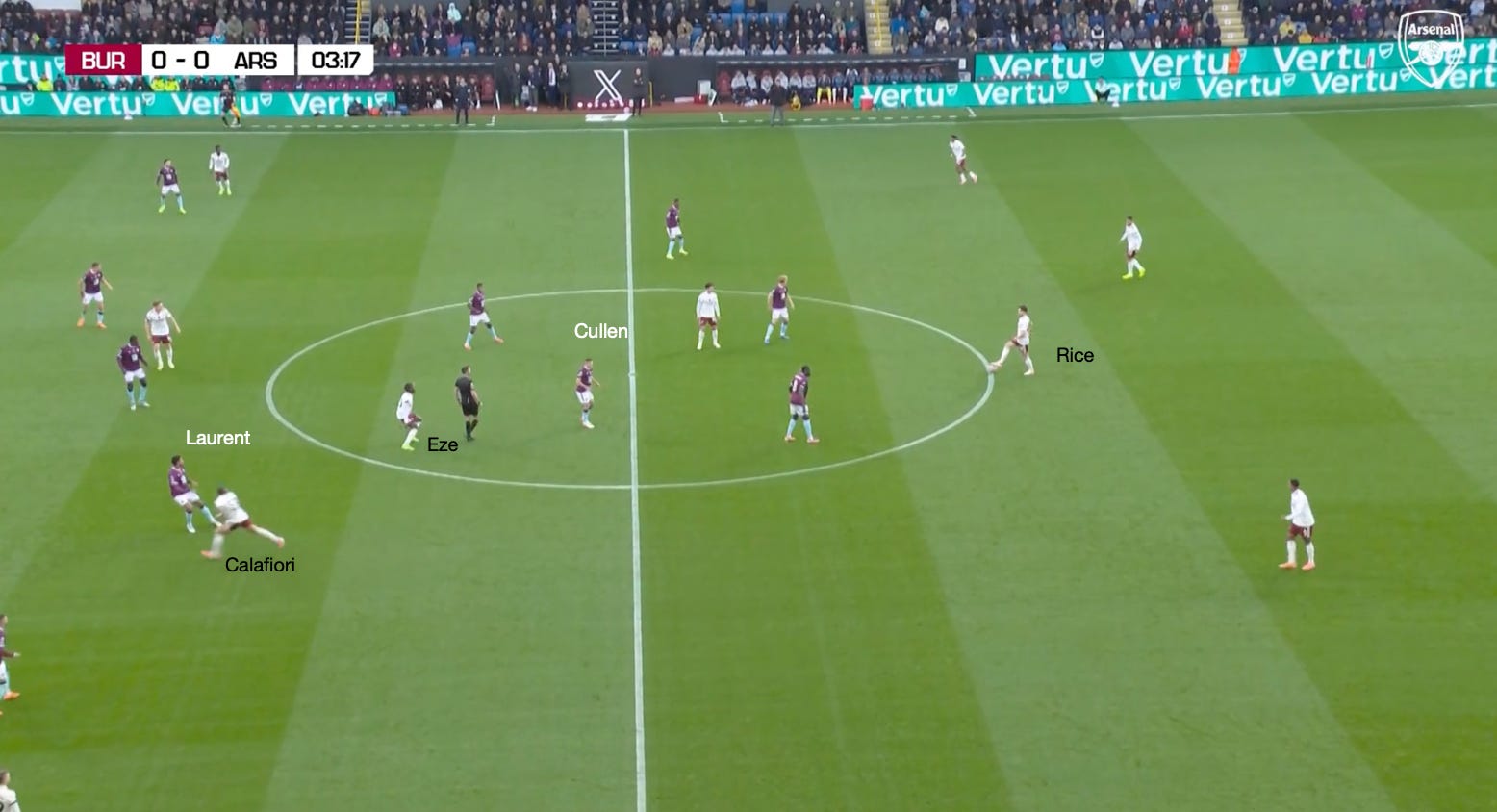
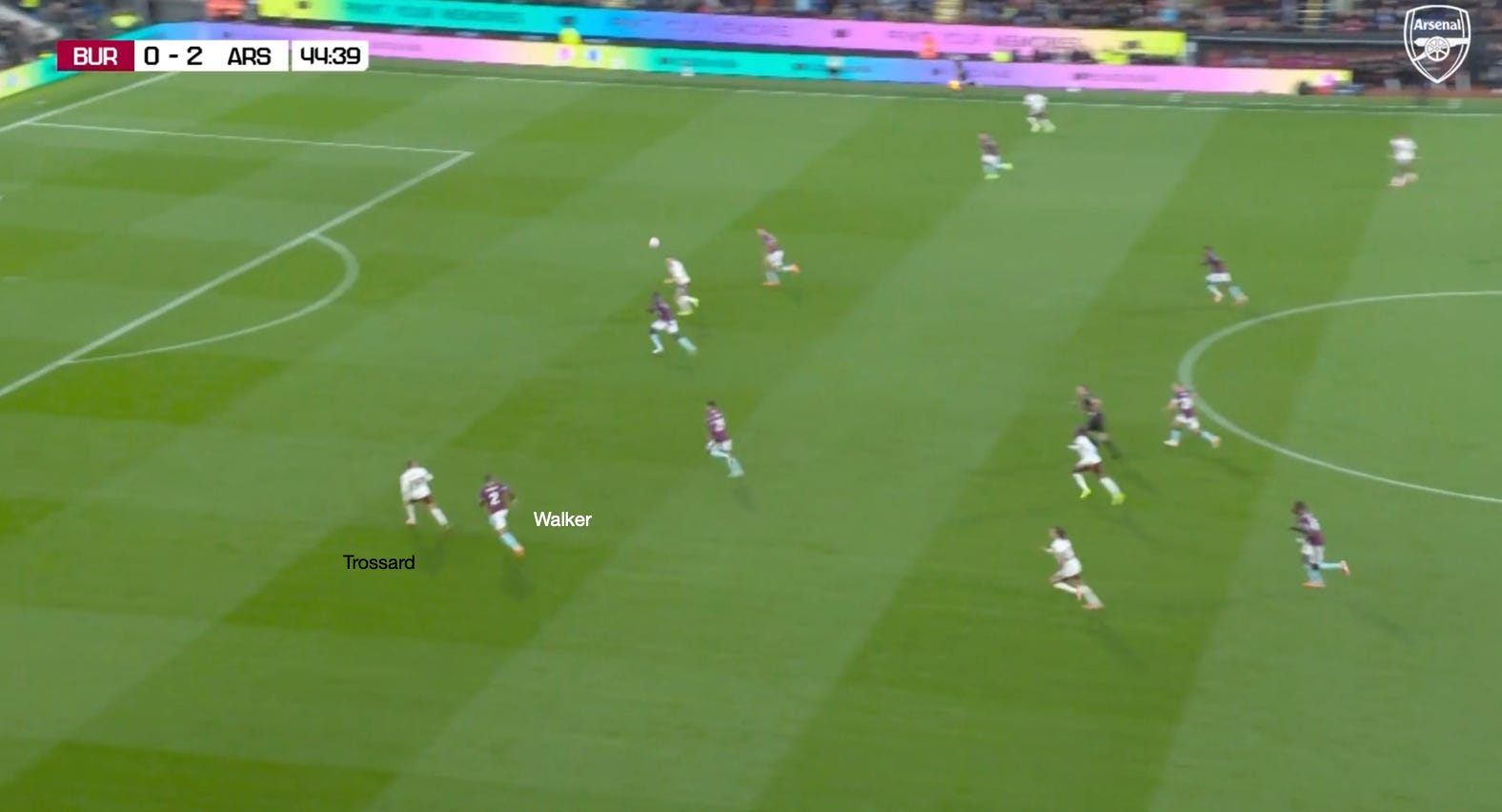
The first sees Riccardo Calafiori attempt to make the run following wide central defender Josh Laurent jumping forward as he recognises that Cullen is stepping higher, with Eze drifting laterally to occupy the space left vacated. The ball isn’t played in behind by Rice, though, on this occasion.
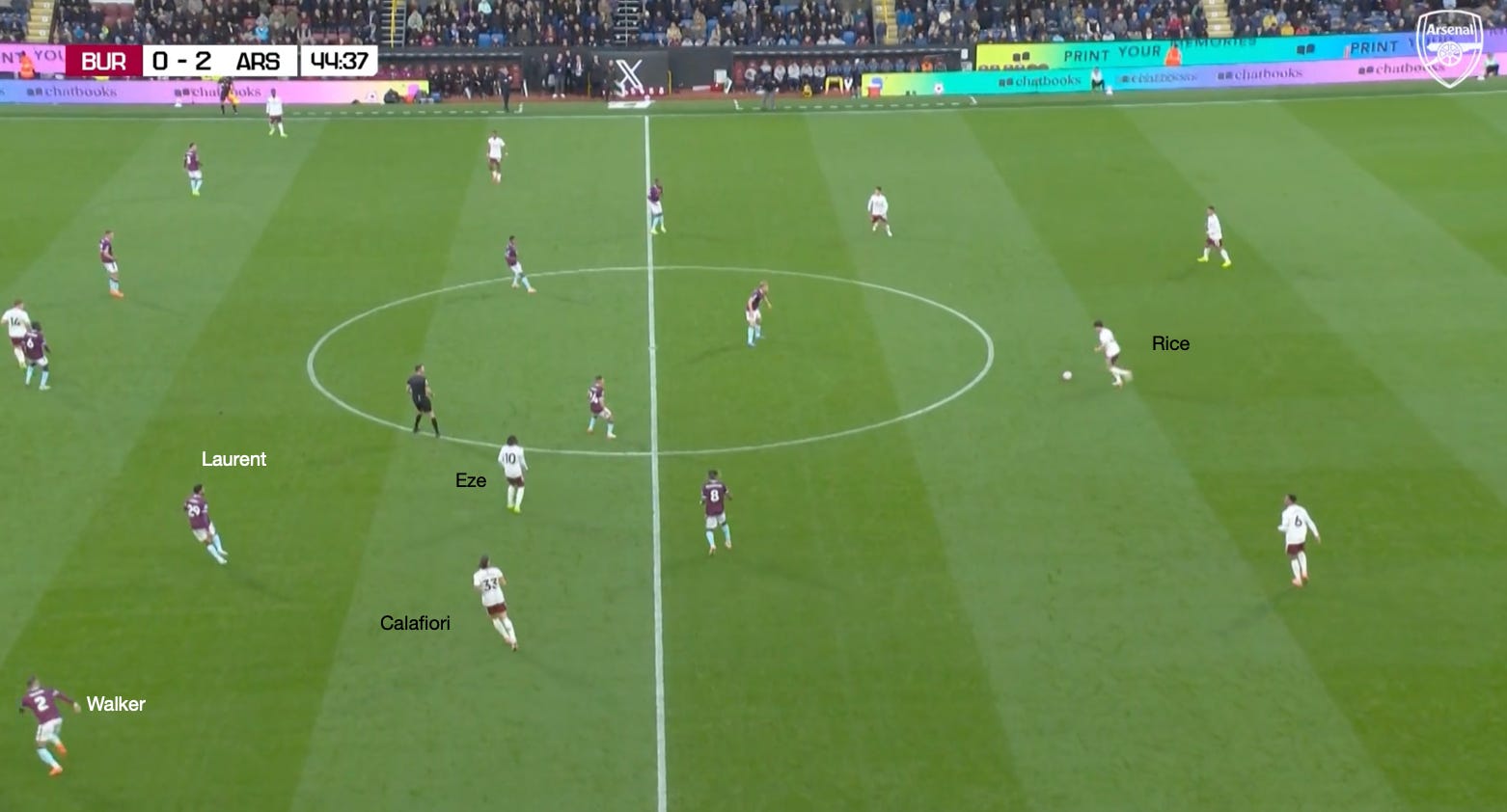
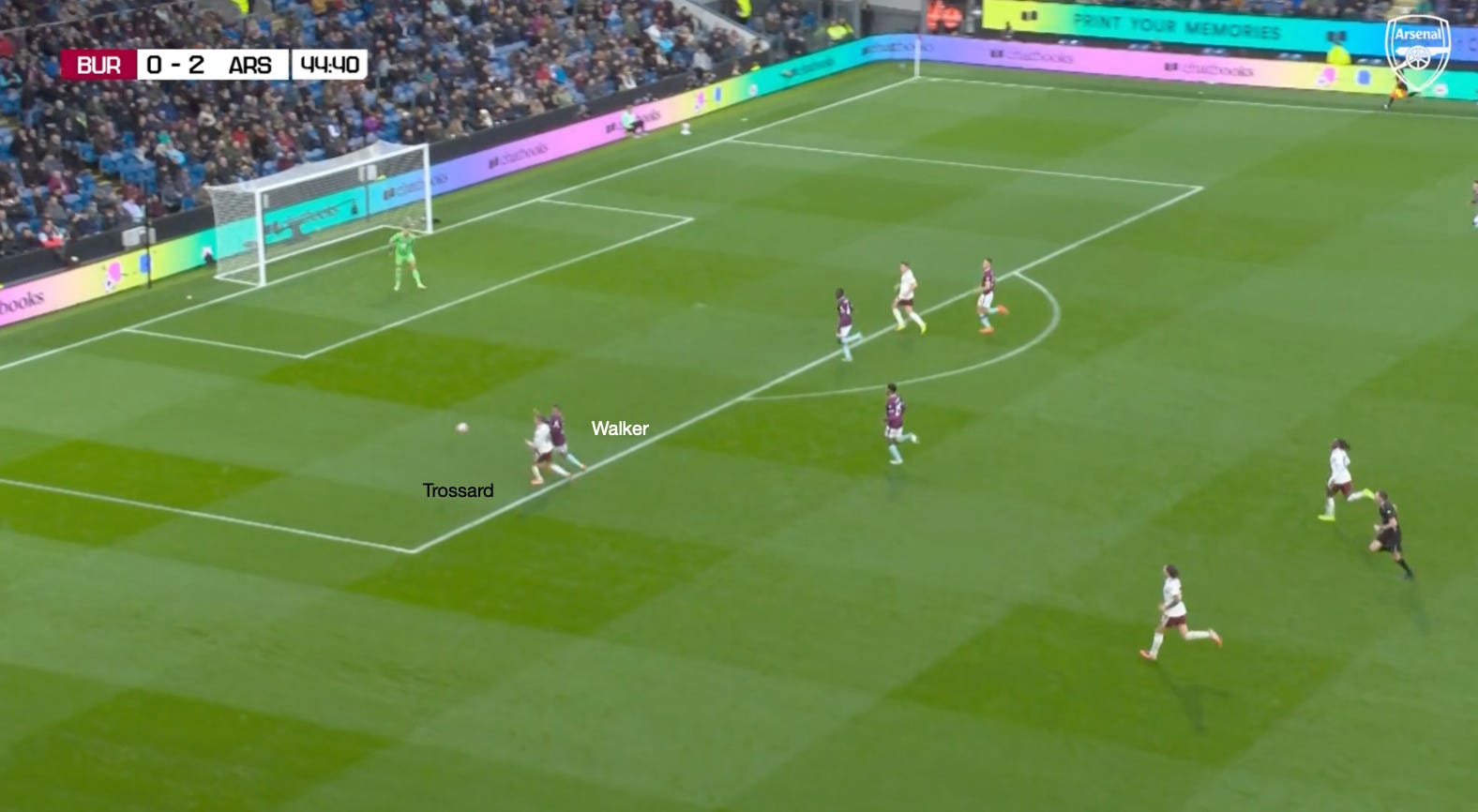
And in the second situation below, you can see Laurent ready to squeeze the space as both Eze and Calafiori are in dangerous positions between the defensive and midfield line, which is the trigger for Trossard to abandon width and threaten in behind. Unfortunately, a poor touch from Trossard prevents anything from coming to fruition.
There were many positives I could have discussed instead of producing a piece that illustrates the ideas presented in last week’s article.
From Rice’s complete midfield display, to the positive ripple effect created by Zubimendi, to Gyökeres’ most complete performance in an Arsenal shirt, etc
However, I personally wanted to stress that our game model is built around performing certain actions, behaviours and principles in relation to what the opposition is doing. Whether it’s a back five or a back four, we utilise specific ideas to generate advantages.
What creates unpredictability is the personnel on the pitch. Having a squad of players who provide different qualities and can operate in various zones across the pitch is what adds to the chaos and magic.
Just take Rice as an example. Against Fulham (Combating tactical homogeneity), the former West Ham star’s role as our wide left central defender in the second half was key in aiding our right-hand side. In this piece, we have seen Rice stationed more in the single pivot. We can expand this conversation by comparing the Crystal Palace and Burnley encounters.
Similar structures were deployed, as highlighted in this post, but against Oliver Glasner’s men, Calafiori was predominantly used as the wide left central defender, with Rice further ahead. But at Turf Moor, it’s Calafiori, who was tasked with aiding our final third dynamics, via vertical runs and connecting with Trossard.
My overarching point is that you will see similar principles and structure against a back five, for example, but where certain players are standing may differ, and that’s because we want specific qualities in certain zones, which will vary from game to game, and this naturally makes it more challenging for the opponent.
Then you have the rotations within our structure, which further aid fluidity and unpredictability.
Always look forward to reading your articles Rohan, great as always🙌🏽